Red Category (PI > 60)
Heavy polluting industries such as pharmaceuticals, tanneries, chemical manufacturing, distilleries, power plants, and electroplating units. Requires rigorous ETP/APCD reviews and EIA approvals.

Mandatory initial environmental clearance under the Water (Prevention and Control of Pollution) Act and Air (Prevention and Control of Pollution) Act. We provide comprehensive legal and technical assistance to industrial plants, manufacturing units, commercial infrastructure, and healthcare facilities to obtain CTE approval from State Pollution Control Boards (SPCBs) and Pollution Control Committees (PCCs) across India.
Get immediate guidance on industrial categorization (Red/Orange/Green/White), site layout planning, ETP/STP design, and SPCB application filing.
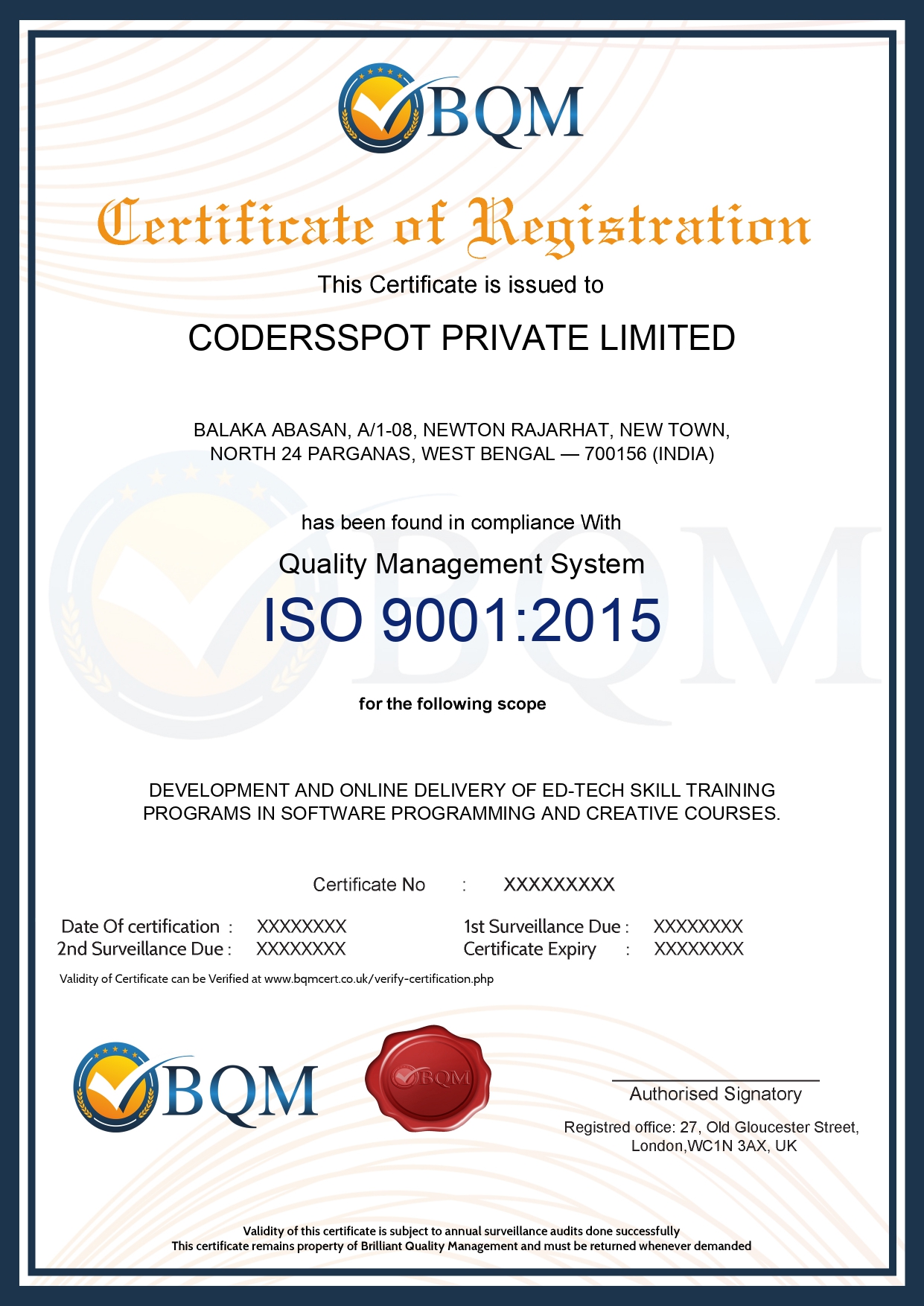
Government Authority / MCA — sample official certificate
Illustrative sample. Your official certificate is issued after approval.
Consent to Establish (CTE) is a primary statutory environmental permit issued by State Pollution Control Boards (SPCBs) or Union Territory Pollution Control Committees (PCCs). Governed under Section 25 of the Water (Prevention and Control of Pollution) Act, 1974, and Section 21 of the Air (Prevention and Control of Pollution) Act, 1981, CTE approval must be secured prior to constructing, expanding, or installing any industrial plant, manufacturing unit, or commercial facility that generates trade effluent, air emissions, or hazardous waste.
Obtaining CTE validates that your proposed unit's location, site plan, pollution control equipment, and waste mitigation strategies align with statutory environmental standards. Corporate Mart manages the complete CTE cycle—from technical project report (DPR) preparation, Effluent Treatment Plant (ETP) capacity modeling, and CPCB category audit to state portal filings and authority inspection defense.
The Central Pollution Control Board (CPCB) classifies industries into four color-coded categories based on their Pollution Index (PI) score, which dictates the complexity of CTE processing.
Heavy polluting industries such as pharmaceuticals, tanneries, chemical manufacturing, distilleries, power plants, and electroplating units. Requires rigorous ETP/APCD reviews and EIA approvals.
Moderately polluting sectors including food processing, auto servicing, textile processing, hotels, building construction projects, and electronic component manufacturing.
Low polluting units such as small assembly plants, dry packaging, solar power plants, bakery units, flour mills, and light engineering operations with streamlined fast-track CTE processing.
Non-polluting industries like IT software parks, handlooms, assembly of air coolers, and bicycle manufacturing. Exempted from formal CTE/CTO, requiring only a simple self-declaration intimation.
Any project or enterprise planning activities that impact air, water, or land environments must obtain CTE clearance before breaking ground.
| Sector / Industry Type | Mandatory Requirement | Designated Approval Body |
|---|---|---|
| New Manufacturing Facilities | Prior approval before constructing building structures or installing machinery. | Respective State Pollution Control Board (SPCB) |
| Plant Expansion / Modification | Required when expanding production capacity or altering product manufacturing lines. | State SPCB / Regional Board Office |
| Health Care Establishments (HCE) | Hospitals, diagnostic labs, and clinics generating bio-medical waste before setup. | SPCB Bio-Medical Waste Cell |
| Infrastructure & Commercial Projects | Real estate townships, shopping malls, and IT complexes generating domestic sewage. | State Level Environment Impact Assessment Authority / SPCB |
Ensure legal security, prevent project delays, and establish a foundation for smooth commercial operations.
Prevent severe enforcement actions under Section 33A of the Water Act, including demolition orders, construction sealings, or site shut-down notices.
Valid CTE approval is mandatory to obtain official power grid connections, industrial water supply lines, and municipal building layout approvals.
Building your facility in exact accordance with your approved CTE site plan guarantees seamless clearance when applying for Consent to Operate (CTO).
Insulate your corporate founders and board members from personal financial liabilities and legal prosecution initiated by environmental authorities.
Banks, financial institutions, and venture investors mandate CTE approval prior to disbursing industrial term loans or project financing.
Demonstrate environmental responsibility, enhancing your brand's credibility with international trade partners and corporate buyers.
Certificate of Incorporation, Partnership Deed, GST Registration Certificate, and PAN card of the business entity.
Sale Deed, Rent/Lease Agreement, Land Possession Certificate, and Revenue Land Use Classification (NA Clearance).
Architectural site layout showing factory sheds, raw material storage, hazard zones, green belt allocation, and ETP/STP locations.
Detailed Project Report (DPR) explaining manufacturing processes, chemical reactions, raw material consumption, and daily water balances.
Engineering drawings, capacity design calculations, and technical specifications of Effluent/Sewage Treatment Plants and air pollution control devices.
No Objection Certificate (NOC) from local Gram Panchayat or Municipal Corporation, and CGWA approval for groundwater abstraction (if applicable).
Our environmental engineers analyze your manufacturing process, raw materials, water consumption, and emission points to classify your unit under CPCB guidelines.
Drafting the Detailed Project Report (DPR), water mass balance diagrams, and technical specifications for Effluent Treatment Plants (ETP) or Air Pollution Control Devices (APCD).
Compiling all documentation, completing state-specific online forms on the OCMMS portal, calculating capital investment fees, and submitting government fee payments.
Coordinating with SPCB Regional Officers during site inspections, addressing technical clarification letters, and providing representations before board consent committees.
Securing the official Consent to Establish certificate, enabling you to commence factory construction, machinery installation, and utility setups lawfully.
Understanding the life cycle of your CTE permit ensures uninterrupted project completion.
CTE certificates are typically granted for a period of 1 to 5 years depending on the state board and estimated project construction timeline.
If factory construction or machinery commissioning is delayed, an application for CTE extension must be submitted to SPCB prior to certificate expiry.
Once construction is completed and pollution control devices are installed, units must apply for Consent to Operate (CTO) before trial production begins.
Our team of experienced environmental engineers and advocates routinely liaises with SPCB and PCC regional offices across all Indian states and Union Territories.
We do not just fill forms—our internal engineering team prepares robust water balances, waste discharge schemes, and air pollution control plans that guarantee board approval.
Through thorough pre-screening of site plans, land documents, and industrial process flows, we eliminate documentation deficiencies and speed up approvals.
Complete lifecycle advisory beyond CTE, covering Consent to Operate (CTO), Hazardous Waste Authorization, Factory Licenses, Explosive NOCs, and CGWA approvals.
Consent to Establish (CTE) is the preliminary permission required before starting construction, setup, or installation of an industrial unit. Consent to Operate (CTO) is the second-stage clearance required after construction and installation are complete but before commencing trial production or commercial operations.
No. Under the Water Act (1974) and Air Act (1981), undertaking any physical construction, installing machinery, or establishing site foundations prior to receiving formal CTE approval is illegal and can lead to stop-work notices, sealing of premises, or financial penalties from SPCBs.
Statutory government fees for CTE are calculated based on the total Capital Investment (CI) of the project—which includes the total cost of land, building, plant, machinery, and equipment. Each state SPCB has its own fee slab schedule published on its official portal.
No. Industries categorized under the White Category (Pollution Index up to 20) are generally exempt from obtaining formal CTE and CTO certificates. They are only required to submit a simple self-declaration intimation to the respective SPCB online.
The standard processing timeline for CTE approval ranges from 30 to 90 days from the date of online application submission, depending on the state board, industry category (Green, Orange, or Red), and the completeness of the technical documents submitted.
If construction work or machinery installation is still underway when the CTE validity period expires, you must file an application for CTE Extension or Renewal with the SPCB at least 30 to 60 days prior to the expiration date along with progress reports.
Yes. Commercial building projects, residential townships, shopping centers, and health care facilities (hospitals, diagnostic centers) generating domestic sewage or bio-medical waste must obtain CTE approval under relevant SPCB and Environmental Impact Assessment (EIA) guidelines.
Partner with our environmental engineering and legal experts to complete your SPCB portal filings, site plans, and CTE approvals risk-free.
Get Free CTE Consultation →