Purpose Achieved
The society was formed for a specific objective that has been completed. Dissolution avoids unnecessary compliance burdens.

Close your registered society legally under Section 13. 3/5th majority resolution, Registrar filing & Section 14 compliance. 30 to 90 working days.
Talk to a compliance specialist and dissolve your society with Section 13 resolution, Section 14 asset transfer and Registrar filing.
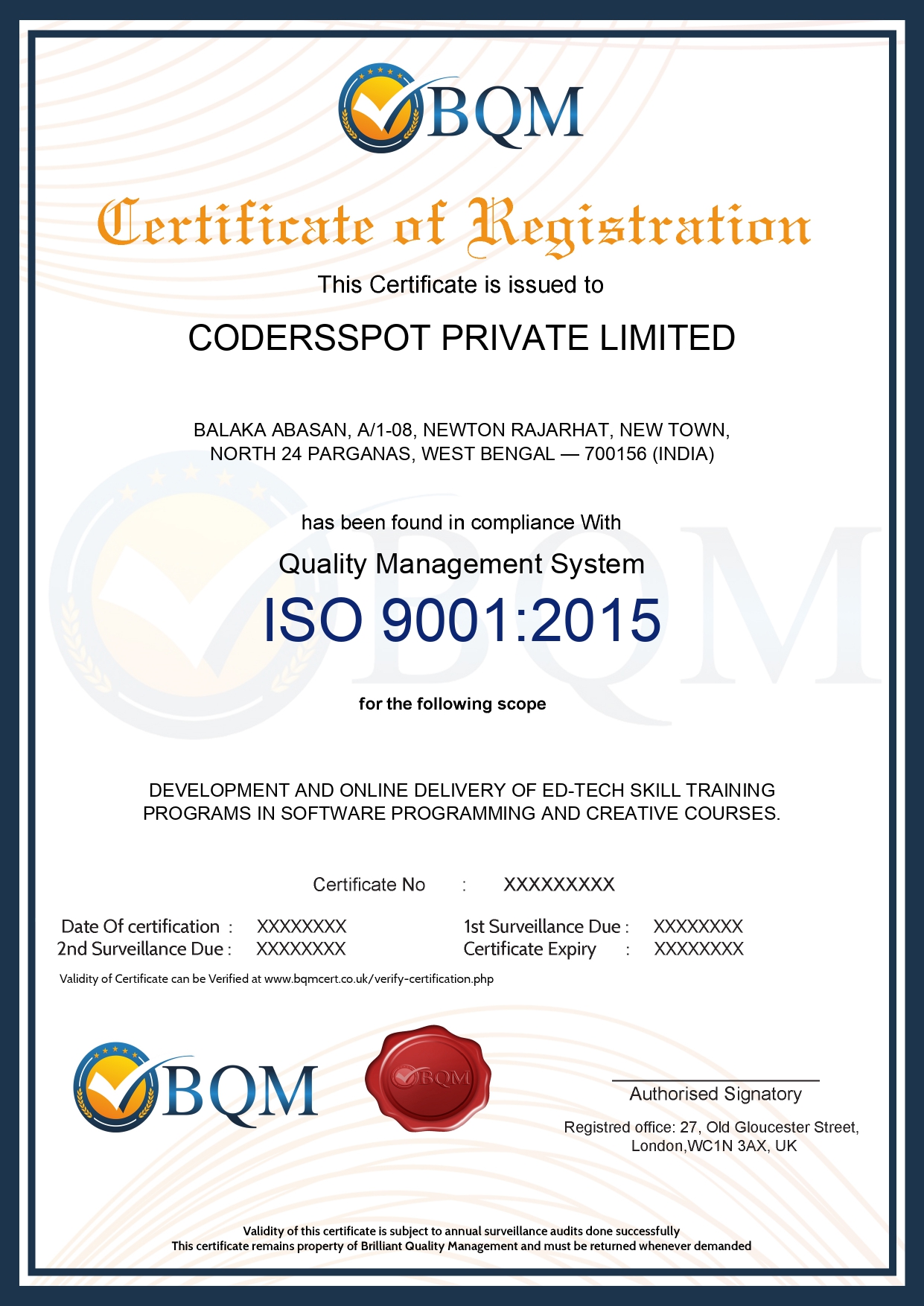
Registrar of Societies — sample registration certificate
Illustrative sample. Your official certificate is issued after approval.
Dissolution of society is the legal process of permanently closing a registered society by obtaining a 3/5th majority vote of total members under Section 13 of the Societies Registration Act, 1860, settling all liabilities, transferring surplus assets to a similar organisation under Section 14, and obtaining a dissolution certificate from the Registrar of Societies.
A critical rule: surplus property cannot be distributed among members. Section 14 mandates that all surplus assets after settling debts must transfer to another society with similar objectives. This ensures assets accumulated through public contributions are preserved for their intended purpose.
The society was formed for a specific objective that has been completed. Dissolution avoids unnecessary compliance burdens.
Membership has fallen below the statutory minimum of 7 members under Section 1. Recruitment of new members is not feasible.
Resources exhausted, donor support ceased, and liabilities exceed assets. Continued operation is financially unviable.
No meaningful activities for 2 or more consecutive years. Registrar can also initiate suo motu dissolution for 3+ years of inactivity.
Irreconcilable disputes among members or office bearers prevent effective governance. Court-ordered dissolution is common in such cases.
The society is merging with another organisation or restructuring into a Section 8 Company or Trust.
| Parameter | Voluntary (Section 13) | Registrar-Initiated | Court-Ordered |
|---|---|---|---|
| Initiated By | Society members | Registrar of Societies | Members, creditors or state |
| Voting Requirement | 3/5th of total members | Not applicable | Not applicable |
| Common Grounds | Purpose achieved, insolvency, merger | Non-filing of returns for 3+ years | Mismanagement, illegal activities |
| Timeline | 30 to 90 working days | 60 to 120 working days | 6 to 18 months |
| Cost Range | ₹10,000 – ₹25,000 | ₹5,000 – ₹15,000 | ₹50,000 – ₹2,00,000+ |
| Control | Full control with members | Registrar controls | Court controls |
Recommendation: Voluntary dissolution under Section 13 is the fastest, least expensive and most predictable method.
Original certificate issued by the Registrar of Societies.
Memorandum with amendments, current rules/bye-laws and complete member list with addresses.
Resolution signed by 3/5th of total members, EGM notice with delivery proof and detailed meeting minutes.
Certified accounts covering the period up to the dissolution date (Expert fee typically ₹5,000–₹15,000).
Notarized affidavit confirming all debts are settled (stamp paper ₹100).
Section 14 surplus transfer plan with recipient society details and published dissolution notice copy.
Examine MOA, bye-laws and rules for dissolution provisions. Verify the complete member registry to calculate the 3/5th majority threshold under Section 13.
Draft the dissolution resolution specifying grounds and Section 14 surplus plan. Issue written notice to all members with at least 14 days’ lead time.
Conduct the EGM with proper quorum. Obtain consent of at least 3/5th (60%) of total members, not just those present. Record detailed minutes and get the resolution signed.
Clear all debts, employee settlements and statutory obligations. Engage a professional to prepare final audited accounts certified up to the dissolution date.
Publish a notice in at least 1 local newspaper (2 in Maharashtra) inviting objections within 30 days. Keep the published copy as proof for the Registrar.
Submit the application with special resolution, final accounts, no-liability affidavit, member list, newspaper proof and asset distribution plan. Fee ₹50–₹500.
Identify a recipient society with similar objectives. Execute transfer deeds for immovable property and transfer movable assets and bank balances. Members cannot receive surplus.
Cancel 12A/80G (Form 10AB), deregister FCRA if applicable, cancel GST (REG-16) and file GSTR-10, and surrender the society’s PAN.
After verification and expiry of the objection period, the Registrar issues the dissolution order, which is published in the Official Gazette. Retain records for at least 8 years.
Surplus property shall not be paid to or distributed among members. This is a non-negotiable rule. Violating it exposes office bearers to personal legal liability.
Surplus must transfer to another society with similar objectives, determined by 3/5th of members at the dissolution meeting or as directed by the Registrar/court.
For immovable property: registered transfer deeds with stamp duty (typically 5%–7%). For movable assets and bank balances: transfer inventory and demand drafts to the recipient.
Members who contributed specific identifiable property (not cash) may have a claim for return of that property under general trust principles—distinct from a claim on surplus.
File Form 10AB on the Income Tax portal to surrender 12A and 80G registrations within the prescribed timeline.
If FCRA-registered, file Form FC-7 and apply for deregistration with the Ministry of Home Affairs.
Cancel GST via REG-16, file GSTR-10 if required, and surrender the society’s PAN after assessment.
Update status on NITI Aayog NGO Darpan if registered. Retain all dissolution records for at least 8 years.
The 3/5th majority is calculated on total membership, not members present at the EGM. If the society has 100 members, 60 must consent.
Most states require a published notice with a 30-day objection window. Filing without this proof results in Registrar rejection.
Section 14 strictly prohibits this. Any such distribution can be challenged in court and attracts personal liability for office bearers.
EGM notice must be sent to all members at their registered addresses with at least 14 days’ lead time and delivery proof retained.
Specialists experienced in Section 13 voluntary dissolution, Section 14 surplus transfer and Registrar filings across states.
Bye-laws review, 3/5th resolution, EGM, final accounts, newspaper notice, surplus transfer, 12A/80G/FCRA cancellation, GST and PAN surrender.
Voluntary dissolutions targeted for completion in 30 to 90 working days with emphasis on first-attempt Registrar acceptance.
Clear with dedicated professional support. Registrar fees, stamp duty, newspaper and Expert charges billed separately at actuals. No hidden charges.
Dissolution of society is the legal closure of a registered society under Section 13 of the Societies Registration Act, 1860. It requires a 3/5th majority of total members, settlement of liabilities, transfer of surplus assets under Section 14 to a similar society, and a dissolution certificate from the Registrar.
At least 3/5th (60%) of the total members of the society must consent—not just those present at the EGM. If the society has 100 members, at least 60 must approve the dissolution resolution.
No. Section 14 of the Societies Registration Act strictly prohibits distribution of surplus property among members. Surplus must be transferred to another society with similar objectives. Violation can attract personal liability for office bearers.
Corporate Mart provides transparent, tailored assistance based on your entity structure and state requirements. Contact our expert team for a detailed proposal. Registrar fee is ₹50–₹500, stamp duty ₹100–₹500, newspaper ₹3,000–₹8,000 and Expert fees for final accounts ₹5,000–₹15,000. Total for a standard voluntary dissolution is typically ₹10,000–₹25,000 (without immovable property transfer).
Voluntary dissolution under Section 13 typically takes 30 to 90 working days. Registrar-initiated dissolution may take 60 to 120 days. Court-ordered dissolution can take 6 to 18 months.
Registration certificate, MOA and bye-laws, complete member registry, special resolution (3/5th), EGM notice and minutes, final audited accounts, no-liability affidavit, asset disposal plan under Section 14, and newspaper publication proof.
Yes, in most states. A dissolution notice must be published in at least one local newspaper (two in Maharashtra) with a 30-day objection period. Filing without this proof typically leads to Registrar rejection.
You must cancel 12A/80G via Form 10AB on the Income Tax portal, deregister FCRA with the Ministry of Home Affairs (if applicable), cancel GST and surrender the society’s PAN as part of post-dissolution compliance.
3/5th majority resolution, Section 14 surplus transfer and Registrar filing with expert support. 30 to 90 working days.
Get Free Consultation →